
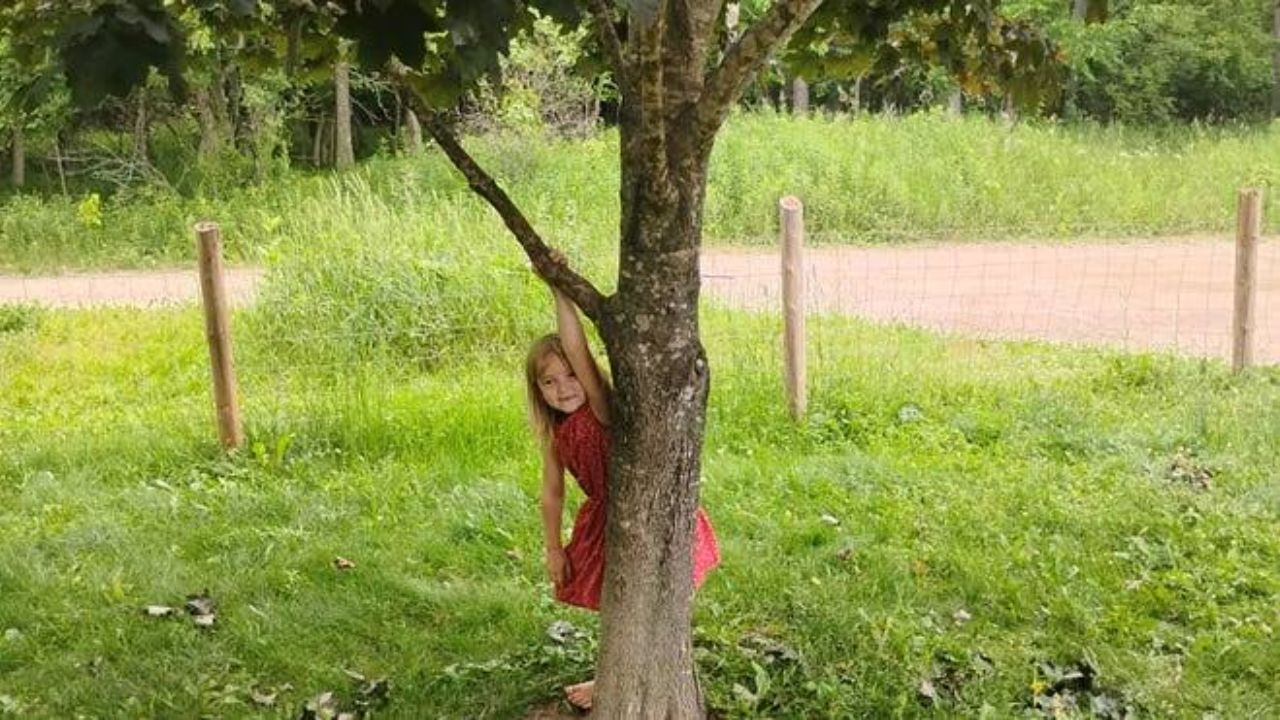
TIGERTON, WI – A local family is urging parents to stay vigilant after a 6-year-old girl was attacked and bitten by a rabid bat while climbing a tree in her own front yard.
The Attack in the Tree
The incident occurred around 8:00 p.m. on June 23 in Tigerton, a rural village about 60 miles west of Green Bay. Cecelia Kale was playing on a low tree branch when a bat suddenly latched onto her leg.
Her mother, Elizabeth Kale, noticed her daughter frozen in fear on the branch before the young girl screamed. Cecelia’s two brothers, aged 11 and 16, rushed to help, successfully knocking the bat off her leg and killing it.
First Rabies Case of 2026
The family immediately took Cecelia to a nearby emergency room and brought the bat along for testing. Within 48 hours, the Shawano-Menominee Counties Health Department confirmed the bat tested positive for rabies.
Health Officer Nick Mau confirmed this is the counties’ first confirmed rabies case of 2026. While the area averages about one wild animal case per year, human bites are exceptionally rare. Cecelia has already begun the standard four-shot post-exposure vaccine treatment.
Understanding the Threat
Rabies is a viral disease attacking the central nervous system and is nearly 100% fatal if left untreated once symptoms appear. However, immediate post-exposure vaccination is virtually 100% effective.
In the United States, bats are the leading cause of rabies transmission to humans, accounting for roughly 7 out of 10 domestic rabies deaths.
Official Health Department Guidance
Following the incident, local health officials issued an urgent reminder to the public regarding wildlife safety:
- Educate Children: Teach kids to respect wild animals and keep a safe distance, even if they look harmless or cute.
- Vaccinate Pets: Ensure all outdoor pets and farm animals (like barn cats) are fully vaccinated.
- Immediate Action: If bitten or scratched, wash the wound thoroughly with soap and water immediately, then rush to an emergency room.
- Secure the Animal: If it can be done safely, capture or hold the animal so health officials can test it.