
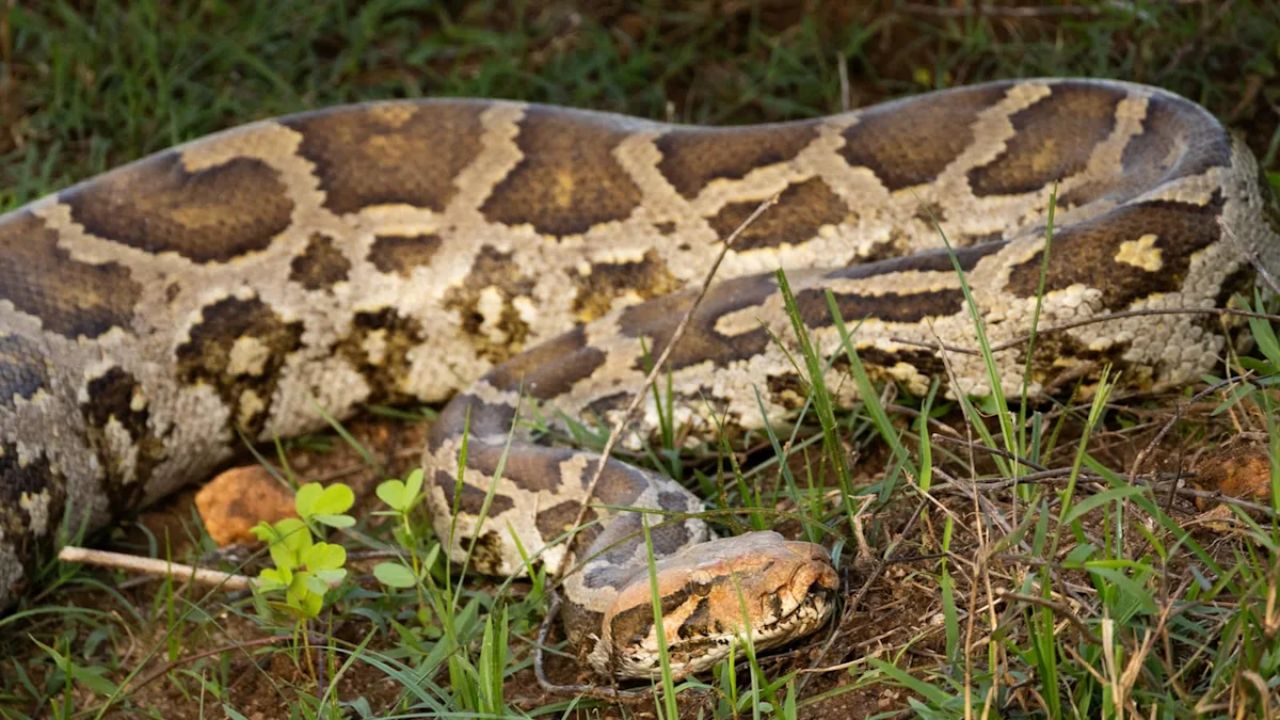
INDIA – A dramatic video circulating online showing an enormous reticulated python with a massive bulge in its midsection has sparked widespread concern over the growing overlap between wildlife and local farming communities.
The Viral Incident
The footage, which rapidly gained traction online, captures a giant python moving across a local farm with an extraordinarily distended body. According to local reports, the snake’s swollen midsection indicates it had recently swallowed a large animal.
The original video description claimed the snake had consumed a whole cow, prompting a local farmer to attempt to lasso the reptile’s head in an effort to remove it from the property. Based on its distinct skin patterning, experts believe the reptile is a reticulated python, a species known to grow between 13 and 20 feet long.
The Economic and Safety Impact
While encounters with large snakes are not uncommon in rural regions, this incident highlights a growing and serious issue for agricultural communities:
- Financial Loss: For local farmers, the loss of livestock represents a devastating blow to their primary source of income.
- Human Risk: Attempting to handle or restrain a massive predator without professional assistance puts farmers and bystanders at extreme risk.
Rising Human-Wildlife Conflict
Wildlife experts note that this encounter reflects a broader global pattern of increasing contact between humans and large predators. As agricultural land expands into natural habitats, wild animals are frequently drawn closer to residential areas and farms in search of easily accessible food sources, such as livestock.
The reticulated python is currently listed as a species of “Least Concern” by the International Union for Conservation of Nature (IUCN). However, authorities emphasize that this status does not lessen the real-world dangers these animals pose in populated areas.
Wildlife officials urge anyone who encounters a large snake to immediately contact trained wildlife authorities rather than attempting to capture or restrain the animal themselves.