
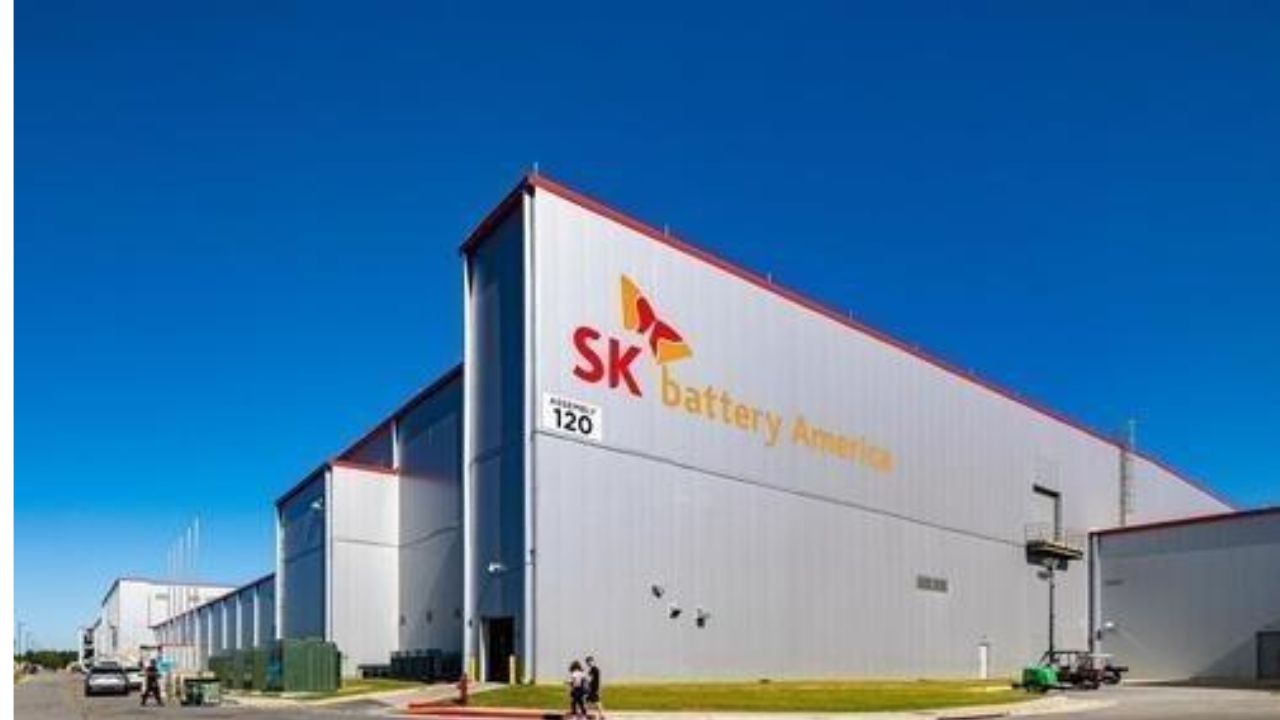
Commerce, Georgia — Nearly 1,000 workers have been laid off at an electric vehicle battery manufacturing plant in northeast Georgia, as automakers reassess their electric vehicle production plans and consumer demand for EVs remains uncertain.
According to a Worker Adjustment and Retraining Notification (WARN) filing, 958 employees at the Commerce, Georgia facility lost their jobs Friday, representing roughly 37% of the workforce at the plant operated by SK Battery America.
Nearly 1,000 Jobs Cut at Georgia Battery Plant
Company officials confirmed that Friday marked the last working day for the affected employees, although they will continue to receive pay through May 6.
The battery manufacturing facility will still employ approximately 1,600 workers after the layoffs.
The WARN notice was filed by human resources chief Chuck Moore.
The plant originally opened in January 2022 after a $2.6 billion investment by the South Korean battery manufacturer.
Changes in EV Plans Affect Supply Chain
The facility has been a key supplier for several electric vehicle programs, including the Ford F-150 Lightning.
However, Ford Motor Company announced in December that it would cancel the fully electric version of the pickup truck, instead shifting toward an extended-range version.
Industry analysts say changing EV production strategies among automakers are affecting companies across the battery supply chain.
An SK spokesperson said the layoffs were necessary to align operations with current market conditions.
Company Says It Remains Committed to Georgia
Despite the job cuts, company officials say SK still plans to maintain a strong presence in the state.
According to company spokesperson Joe Guy Collier, the company continues exploring new business opportunities.
“SK Battery America remains committed to Georgia and to building a robust U.S. supply chain for advanced battery manufacturing,” Collier said.
Read Also: Kroger to Shut Down 3 Locations in Fresno, Sacramento and Inglewood, Lay Off 171 Workers
The company is also exploring opportunities in battery energy storage systems, which are used to store electricity from renewable sources.
Billions Invested in EV Manufacturing
SK and Ford previously announced plans to invest $11.4 billion in joint battery plants across the United States.
However, that joint venture ended in December.
SK also supplies batteries to other automakers, including Volkswagen.
In addition, SK and Hyundai Motor Company are continuing construction on a $5 billion battery plant near Cartersville, Georgia.
Georgia Became a Major EV Manufacturing Hub
Georgia has attracted billions of dollars in EV and clean energy manufacturing investments in recent years.
Large projects include:
• Rivian — $5 billion factory
• Hyundai’s $7.6 billion manufacturing complex
• Multiple battery plants and clean energy facilities
Officials say these projects have created tens of thousands of jobs across the state.
EV Sales Growth Slowing
Although EV adoption continues to increase, it has grown more slowly than many automakers initially expected.
Electric vehicles accounted for about 8% of new vehicle sales in the U.S. in 2025, roughly the same share as the previous year.
Because of this, major manufacturers including Ford, General Motors, and Stellantis have been reassessing their electrification strategies.
Many companies are now shifting investment toward hybrid and plug-in hybrid vehicles, which are seen as more appealing to buyers concerned about charging infrastructure and driving range.
Debate Over Future of EV Industry
The layoffs highlight the challenges facing the rapidly evolving EV industry as companies balance ambitious climate goals with real-world market demand.
While new battery plants and EV factories continue to be built across the country, some manufacturers are slowing expansion plans or reducing production targets.
For workers and communities that have invested heavily in EV manufacturing, the changes raise questions about how quickly the transition to electric vehicles will ultimately happen.
Do you think EV demand will continue growing in the U.S., or will hybrids dominate the market in the coming years? Share your thoughts respectfully in the comments below.