
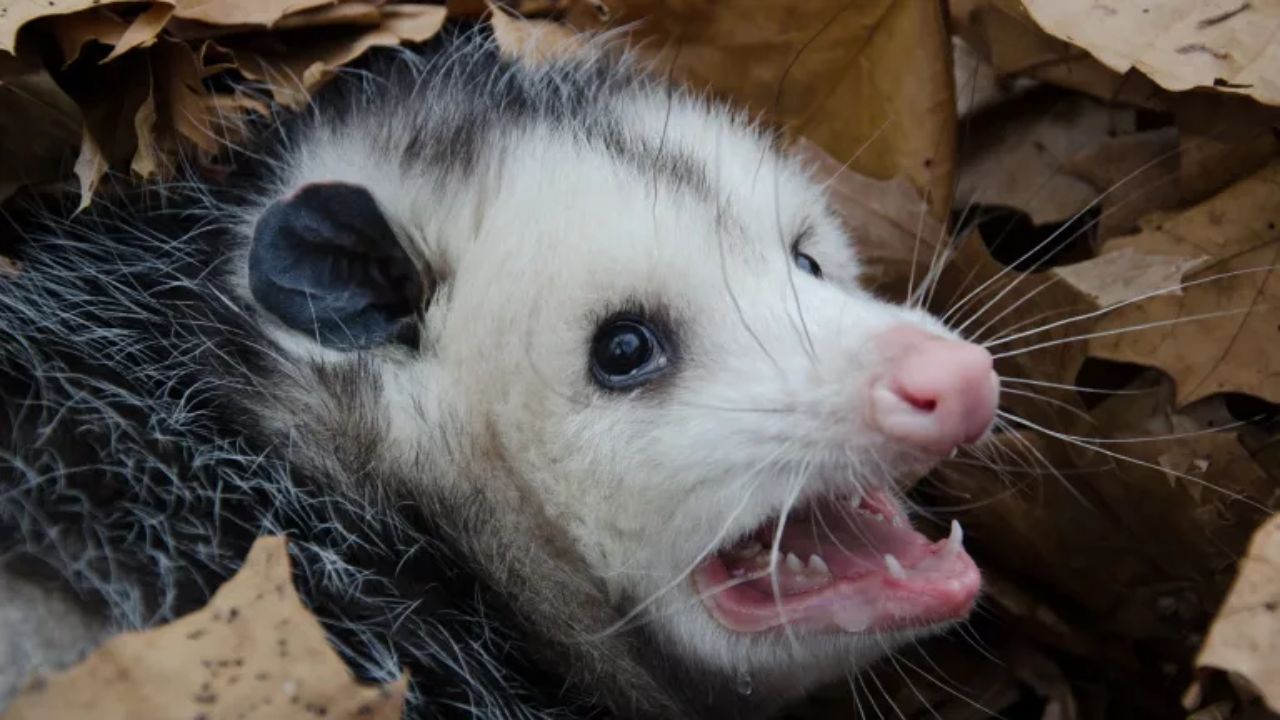
KEY LARGO, FL — In the dense mangroves and swampy terrain of the Florida Keys, a high-stakes game of “cat and mouse”—or rather, “snake and opossum”—is unfolding. Research biologists at the Crocodile Lake National Wildlife Refuge have launched an innovative, albeit unconventional, strategy to hunt down the state’s most elusive predator: the Burmese python.
The weapon of choice? Common local opossums equipped with high-tech GPS tracking collars.
The “Mortality Signal” Strategy
The concept is as simple as it is effective. Biologists A.J. Sanjar and Michael Cove have been fitting native opossums with specialized collars that emit a “mortality signal” if the animal dies. In the Florida wilderness, a sudden death for an opossum often means it has become a meal for a Burmese python.
When the signal goes off, researchers track the GPS coordinates directly to the source. Because pythons take several days to digest their prey, they are often found resting near the site of the kill, making it easy for “snake hunters” to locate and remove the invasive reptiles.
Turning a Discovery into a Strategy
This method wasn’t born in a lab, but out of a 2022 discovery. Scientists tracking local mammals noticed that their expensive tracking collars were disappearing, only to find them later inside the bellies of large pythons.
“We’re not putting these animals out there and in harm’s way,” clarified Jeremy Dixon, manager of the Crocodile Lake National Wildlife Refuge. “Harm’s way is already there. We’re just documenting what’s happening and using it to protect the ecosystem.”
The program has become significantly more cost-effective over time. Collars that once cost $1,500 have been redesigned for just $190, allowing the team to expand. Currently, there are 32 collared opossums in the field, with plans to reach 40 by the summer peak—the height of the python feeding and breeding season.
Why the Python Problem is So Dire
Burmese pythons were introduced to Florida in the late 20th century through the exotic pet trade. Since then, they have decimated local wildlife. In areas like the Everglades, sightings of small mammals—including the cotton mouse, woodrat, and opossum—have declined by as much as 90%.
Unlike native predators, pythons can grow up to 19 feet long and have no natural enemies in Florida. Their ability to hide in abandoned structures and deep mangroves makes them nearly impossible to find with traditional methods like tracking dogs or “scout snakes.”
“We’re getting them way back in areas where they may never cross a road,” Dixon explained. “The opossums are showing us exactly where the snakes are hiding.”
The Future of the Fight
By using the opossums’ natural movement patterns, researchers are finally able to reach the “deep wild” where pythons thrive undisturbed. This data is critical not just for removing individual snakes, but for understanding how these apex predators are moving through the Keys and threatening native species with lower reproduction rates.
As the program scales up this summer, Florida officials hope this “living GPS” system will finally turn the tide in a battle that has threatened the state’s biodiversity for decades.
What do you think, Florida? Is using tracked opossums a brilliant move to save our ecosystem, or is it too controversial? Should more funding go into high-tech tracking to stop the python invasion?
Tell us your thoughts in the comments below!