
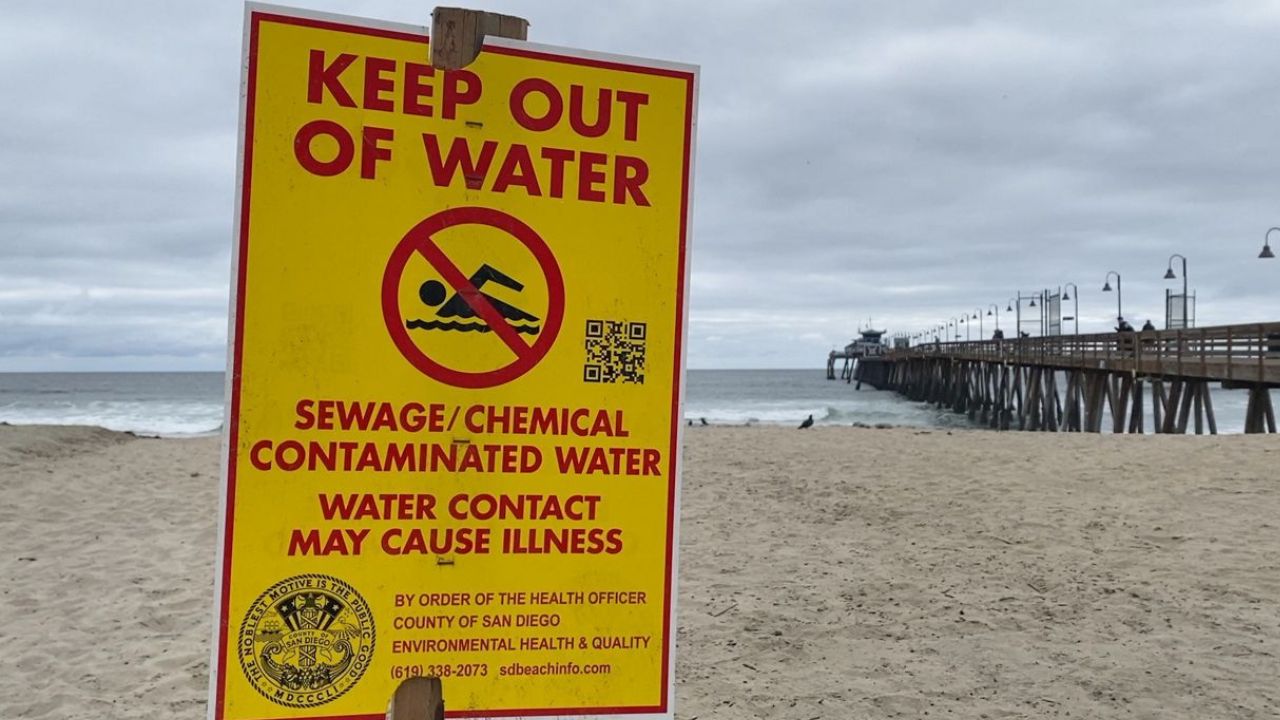
Imperial Beach, California — What was once a popular destination for beachgoers has now spent nearly three years off-limits to the public as toxic pollution continues to flow into coastal waters, creating environmental, health, and economic challenges for one Southern California community.
Imperial Beach, located in San Diego County near the U.S.-Mexico border, has remained closed for more than 1,000 consecutive days due to contamination linked to sewage flowing through the Tijuana River.
The prolonged closure has frustrated residents, hurt local businesses, and raised ongoing concerns about public health.
Sewage Pollution Continues to Impact Coastal Waters
According to local officials, untreated wastewater and sewage continue to enter the river system before eventually reaching the Pacific coastline near Imperial Beach.
The pollution problem stems from years of sewage treatment failures and aging infrastructure that have contributed to a buildup of contaminated water, decaying organic matter, and hydrogen sulfide gas. Reports indicate the fumes have become so extensive that they can even be detected in satellite imagery.
In a statement, the City of Imperial Beach warned residents that sewage flows in the Tijuana River remain exceptionally high and that untreated wastewater continues to be discharged into coastal areas.
As a result, public access to the beach remains restricted, leaving many residents wondering when conditions will improve.
Local Businesses Feel the Economic Pain
The extended closure has taken a significant toll on the city’s economy.
Research conducted by the San Diego Regional Chamber of Commerce found that Imperial Beach is losing approximately $500,000 annually in tourism-related revenue because visitors are choosing other destinations.
For many business owners, the lack of tourists has created ongoing financial pressure.
Local ice cream shop owner Jen Crumley described the situation as heartbreaking for the community.
“No one wants to come here, and it’s really sad.”
Crumley said businesses have become increasingly dependent on local customers as tourism declines. However, many establishments are struggling to maintain staffing levels and profitability.
“It’s been empty, so we’re not getting as much business as we used to, and it’s just been rough across the board,” she said.
The economic impact has extended beyond individual businesses, affecting jobs and spending throughout the community.
Residents Report Growing Health Concerns
Beyond the economic consequences, residents say the pollution is affecting their quality of life.
Reports have documented a range of health complaints among community members, including migraines, nausea, dizziness, eye irritation, brain fog, and skin rashes.
Parents have also expressed concern about respiratory issues among children, particularly asthma symptoms that reportedly worsen when pollution levels increase and odors become more noticeable.
The ongoing situation has fueled frustration among residents who say they are dealing with both environmental hazards and uncertainty about when conditions will improve.
Efforts Underway to Address the Crisis
Federal, state, and local agencies have taken steps to address the long-running problem.
In September 2024, funding connected to the United States-Mexico-Canada Agreement (USMCA) was directed toward improvements at a boundary water treatment facility. Since then, investments from both the United States and Mexico have supported projects aimed at improving water quality.
These efforts include constructing new sewage treatment facilities, replacing aging infrastructure, and increasing wastewater treatment capacity.
Despite those investments, the improvements have not yet resulted in the reopening of Imperial Beach.
Meanwhile, local advocacy group Citizens for Coastal Conservancy (C4CC) has criticized government agencies for what it views as insufficient action.
The group has also questioned claims that all of the pollution originates from Mexico, arguing that some sewage may be coming from facilities operated within San Diego County.
C4CC is planning a beach cleanup event in July as community members continue to push for additional solutions.
Chaos at Hersheypark: More Than 50 Youths Charged After Opening Day Fight Forces Families to Hide
Community Continues to Push for Long-Term Solutions
City leaders say they remain engaged with government agencies and continue advocating for immediate and long-term fixes to the sewage crisis.
While infrastructure projects are underway, residents and business owners remain eager for tangible progress that would allow one of Southern California’s most popular coastal destinations to reopen safely.
For now, Imperial Beach continues to face the difficult reality of balancing environmental recovery, public health concerns, and economic hardship while waiting for lasting solutions.
What do you think should be done to address the ongoing sewage crisis affecting Imperial Beach? Should local, state, and federal agencies take stronger action to speed up solutions?
Share your thoughts respectfully in the comments below.