
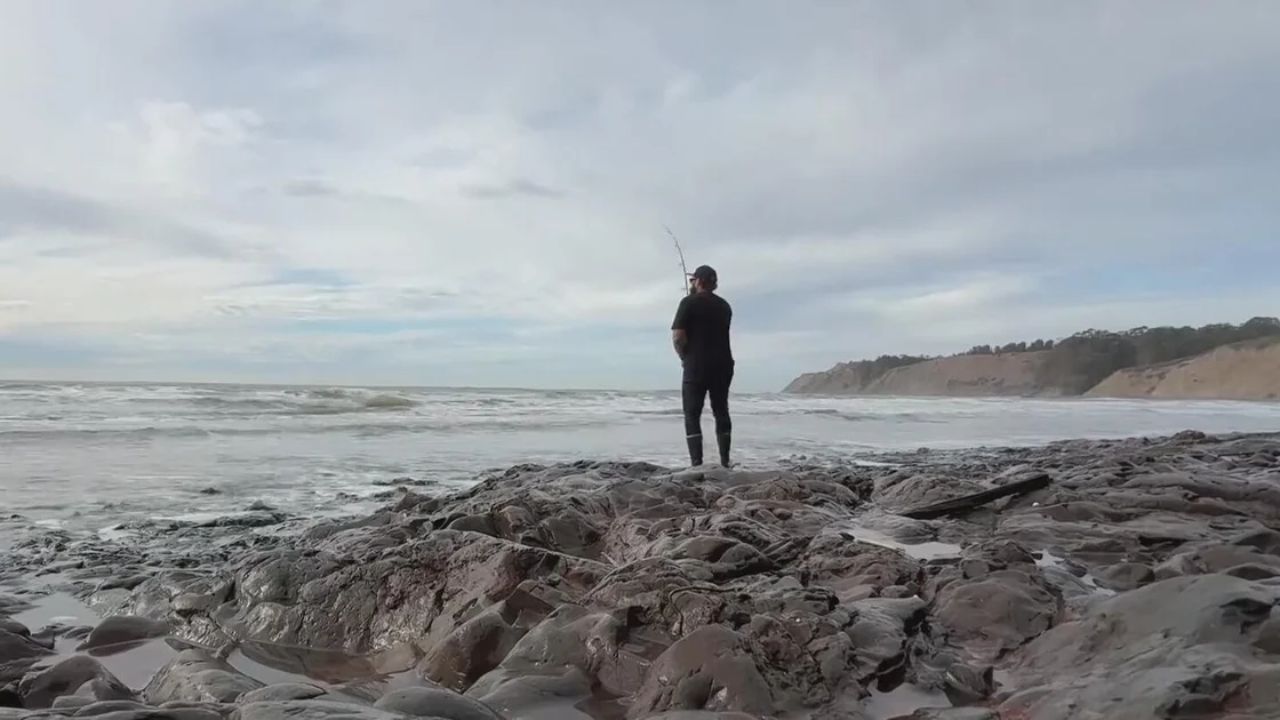
Bolinas, California – A proposal to significantly expand environmental protections at Duxbury Reef, one of the largest shale reefs in North America, is drawing sharp debate across Marin County. A Bay Area environmental group is urging state officials to redesignate the area as a fully protected reserve, a move that would ban all fishing, including recreational angling.
Incident Overview
The proposal was submitted by the Environmental Action Committee of West Marin (EAC), which is seeking to convert the reef’s current designation as a Marine Conservation Area into a State Marine Reserve. If approved, the change would prohibit fishing along the reef and within 1,000 feet of the low-tide line across an eight-mile stretch of coastline.
Supporters argue the ban is necessary to protect fragile intertidal ecosystems, while opponents say it threatens long-standing cultural, recreational, and economic practices tied to the reef.
Why Duxbury Reef Matters
Located near Bolinas, Duxbury Reef is recognized as a biologically rich intertidal habitat, home to fish, invertebrates, and species such as octopus. The reef is also a popular destination for shoreline anglers and visitors who value its educational and recreational opportunities.
Local resident Zach Fuller says the reef has helped him better understand ocean systems and environmental balance.
“I love taking the time to learn how to be patient with it, and learning about how the jetties in the ocean work, about how the fish population has changed over time,” Fuller said.
While Fuller considers himself an environmentalist, he opposes the proposed fishing ban.
“Getting a fish, bringing it back home, has a reward pathway built into it, and appreciation for the health of the reef,” he said.
Environmental Group’s Proposal
Ashley Eagle-Gibbs, executive director of EAC, said the petition is driven by ongoing damage observed by volunteers monitoring the reef. According to Eagle-Gibbs, individuals have been seen removing invertebrates directly from the reef surface.
“Our volunteers have seen invertebrates chiseled off the reef. It’s a highly sensitive, vulnerable environment,” she said. “It’s also a pretty remote location, so there’s limited enforcement.”
EAC’s proposal would expand the protected area to nearly three times its current size, with the goal of simplifying rules and improving conservation outcomes. The group says public access to the reef would remain open, even if fishing is prohibited.
“When the petition was submitted, it had community support, wide stakeholder support from national parks, sanctuaries, professors, scientists, NGOs, and local community members,” Eagle-Gibbs said.
Details of the proposal were also outlined in a recent report, which highlighted the growing divide among local stakeholders.
Community Pushback and Economic Concerns
Despite claims of broad support, some residents describe recent public meetings as highly contentious. Business owners along the coast say the proposed ban could have ripple effects beyond recreation.
Patrick Sullivan, who operates Coast Cafe, said locally sourced fish play an important role in the area’s economy and identity.
“It’s a huge part of the story. We get to share with our customers about where their food comes from and knowing that it sustains this local economy,” Sullivan said.
Opponents argue that responsible fishing can coexist with conservation and that teaching ethical angling practices encourages long-term stewardship of marine environments.
“If nobody’s ever allowed to fish here, that’s a bummer,” Fuller said, questioning what the policy would mean for future generations.
Response From County Leadership
The debate reached county leadership after Marin County Supervisor Dennis Rodoni withdrew his initial support for the proposal. In a letter sent to state officials, Rodoni urged regulators to pause the process.
“I am respectfully asking for Commissioners to set aside, or withdraw, the petition,” Rodoni wrote. “I request that Commissioners instead focus on creating an opportunity for meaningful community engagement and feedback… to help develop a collective vision that reflects the local cultural, ecological, and recreational importance of Duxbury Reef.”
What Happens Next
The California Department of Fish and Wildlife is expected to release a draft evaluation by March, outlining potential impacts of the redesignation. The State Fish and Game Commission will also host a public listening session on April 21 in Half Moon Bay, giving residents and stakeholders a chance to weigh in before any final decision is made.
Conclusion
As state officials review the proposal, Duxbury Reef has become a focal point in the broader debate over conservation, access, and community involvement. Whether the reef becomes fully protected or remains open to regulated fishing will depend on how policymakers balance ecological preservation with local traditions and livelihoods.
Call to Action
Community input will play a critical role in shaping the future of Duxbury Reef. Residents, anglers, business owners, and environmental advocates are encouraged to participate in upcoming meetings and share their perspectives. Share your experiences in the comments below.