
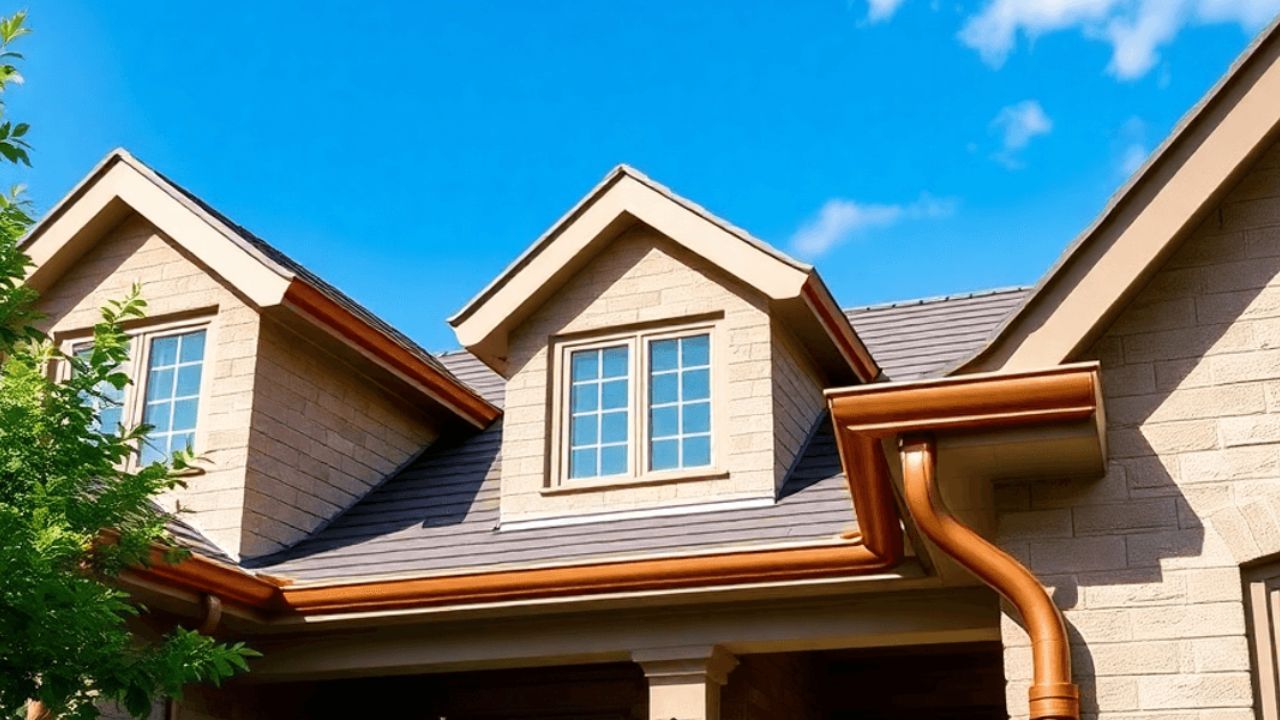
Copper gutters are widely considered the “jewelry” of a home’s exterior. They offer a timeless, reflective sienna glow that eventually matures into a rich, storied verdigris green. But behind the stunning curb appeal lies a complex web of high costs, specialized labor, and unexpected security risks.
Before you invest thousands in this premium upgrade, we spoke with roofing contractors, insurance experts, and legal professionals to break down whether copper is a dream investment or a potential nightmare.
The Century-Long Investment
While standard aluminum gutters typically last between 20 and 30 years, copper exists in a league of its own. Unlike steel, which eventually succumbs to rust, copper develops a protective “patina” layer through oxidation.
“I’ve seen copper gutters that are older than me. That’s not an exaggeration,” says Aaron Christy, founder of Indy Roof and Restoration. “They don’t rust away. If installed correctly, they can last up to 100 years.”
Andre Kazimierski of HomeHero Roofing agrees, noting that while the upfront cost is higher, the lifespan is often triple that of common materials. For homeowners looking for a “one-and-done” solution, copper is functionally unparalleled.
The “Sticker Shock” Reality
The biggest deterrent for the average homeowner is the price tag. While basic installations might range from $3,000 to $8,000, high-end renovations—especially those requiring custom fabrication—can soar much higher. Some homeowners have reported material costs alone exceeding $30,000.
“Copper is expensive in every way: material, labor, and maintenance,” explains Aleks Krylov, President at Stern Gutters and Roofing. Unlike aluminum, which uses sealants, copper requires soldered joints. This requires a level of craftsmanship that many general contractors simply don’t possess. “We rarely recommend it unless it’s a historic preservation or a high-end luxury renovation,” Krylov adds.
The Hidden Danger: Theft and Insurance Woes
Because copper has a high scrap value, these gutters are a magnet for thieves. An expensive asset sitting on the exterior of your home can be stripped in a single night, leaving you with thousands of dollars in damage to your eaves and siding.
This is where the insurance headache begins. Fran Majidi, an insurance expert at Modotech, warns that getting a payout isn’t guaranteed.
- RCV vs. ACV: If your policy is Replacement Cost Value (RCV), you may get like-for-like copper. If it is Actual Cash Value (ACV), depreciation could leave you with a payout far below the cost of new copper.
- The Deductible Trap: If the replacement cost is close to your deductible, filing a claim might not be worth the subsequent premium hike.
- Exclusions: Some insurers have “metal theft” exclusions, especially if the home is under construction or vacant.
Expert Advice: Do Your Homework First
Before pulling the trigger on a copper installation, Indy Roof’s Aaron Christy suggests a simple 10-minute phone call to your insurance agent. “Ask how theft is handled. Ask if there are limits on exterior metals. You don’t want to find out your $20,000 gutters aren’t covered after they’ve been stolen.”
If you do move forward, experts recommend installing a high-quality security system with cameras directed at your roofline and keeping meticulous “before” photos to prove the value of the materials to your insurer.
What do you think? Is the 100-year lifespan of copper worth the risk of theft and the massive upfront cost? Would you install them on your home?
Share your thoughts in the comments below!