
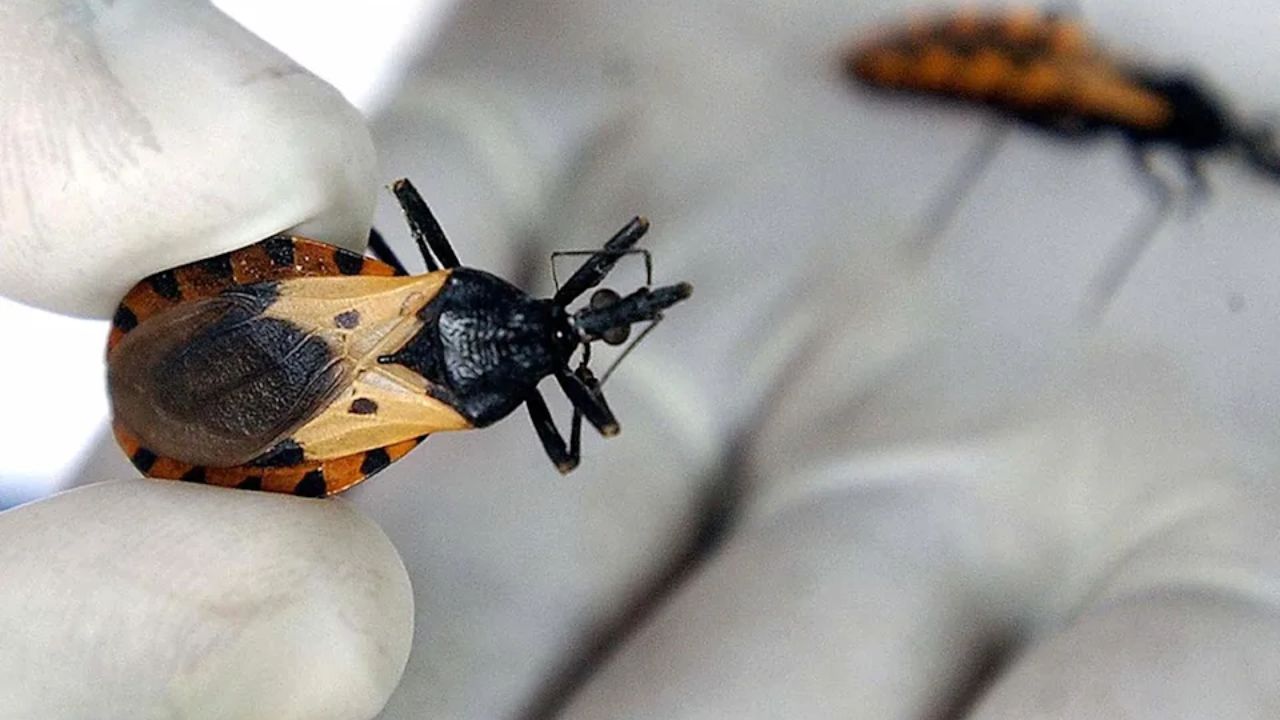
AUSTIN, TX — For over four decades, Becky Roche has shared her home with dogs. But today, her house is silent, and she isn’t sure if she can ever bring another pet home. The reason? A deadly, often invisible threat lurking in her own backyard: the Kissing Bug.
Becky’s nightmare began with Ranger, her Belgian Malinois puppy. Despite following every rule—avoiding dog parks, keeping him close to home, and constant supervision—Ranger collapsed while playing a simple game of fetch last October. The diagnosis was something Becky had never heard of: Canine Chagas Disease.
What is Chagas Disease? The Silent Killer
According to Texas A&M University’s Canine Chagas Collaborative, the disease is caused by the parasite Trypanosoma cruzi. It is carried by the triatomine bug, commonly known as the “Kissing Bug.”
The infection process is particularly gruesome:
- The Source: The parasite is spread through the bug’s feces.
- The Infection: Dogs typically become infected by eating the bug or through fecal matter entering a wound or mucous membrane.
- The Damage: Once inside, the parasite targets the heart muscle, disrupting cells and causing irreversible damage that eventually leads to sudden heart failure.
Tragically, for Ranger, the end came quickly. Just weeks after his collapse, he ate his breakfast and died in Becky’s arms.
A Growing Threat in Austin and San Antonio
While Chagas isn’t a “new” outbreak, veterinarians warn that cases are on the rise. Experts informed Roche that the bug is already rampant in San Antonio and is becoming increasingly common in the Austin area.
Dr. Ashley Saunders, a veterinary cardiologist, notes that younger dogs and those new to the region are the most vulnerable. While infected dogs don’t pose a direct risk to humans, they act as “sentinels”—a warning sign that the deadly bugs are present in the immediate environment.
The Pesticide Problem: Why Your Yard Might Not Be Safe
One of the most terrifying aspects of the Kissing Bug is how difficult it is to eradicate. Roche consulted pest control experts, only to be told that weeks of treatment might still fail.
- Habitat: These bugs live in grass, ivy, and woods, and are most active at night.
- Mobility: Because they can fly, they can easily migrate from nearby wooded areas back into treated yards.
- Lack of Tools: Currently, there are no insecticides specifically approved by the EPA to target Kissing Bugs.
“There’s no preventative and there’s no treatment,” Roche lamented. While Texas A&M is working on experimental drug trials, for most pet owners, a diagnosis is currently a death sentence.
What Should You Do If You See One?
Experts warn: Do NOT squash the bug. Squashing it can release the parasite and increase the risk of infection.
Instead, Texas A&M recommends:
- Capture it: Carefully place the bug in a container.
- Freeze it: This kills the bug without spreading the parasite.
- Submit it: Send the specimen to Texas A&M for testing to help track the spread of the disease.
For Becky Roche, the lesson is a painful one. “I don’t know if I’ll ever get over the fact that I could not keep Ranger safe in my own backyard,” she said.
Have you spotted these bugs in your area? With cases rising in Central Texas, local pet owners are urged to inspect their yards and keep a close eye on their pets’ health.
Tell us in the comments: Have you seen a ‘Kissing Bug’ near your home? Share your location to help warn other neighbors!