
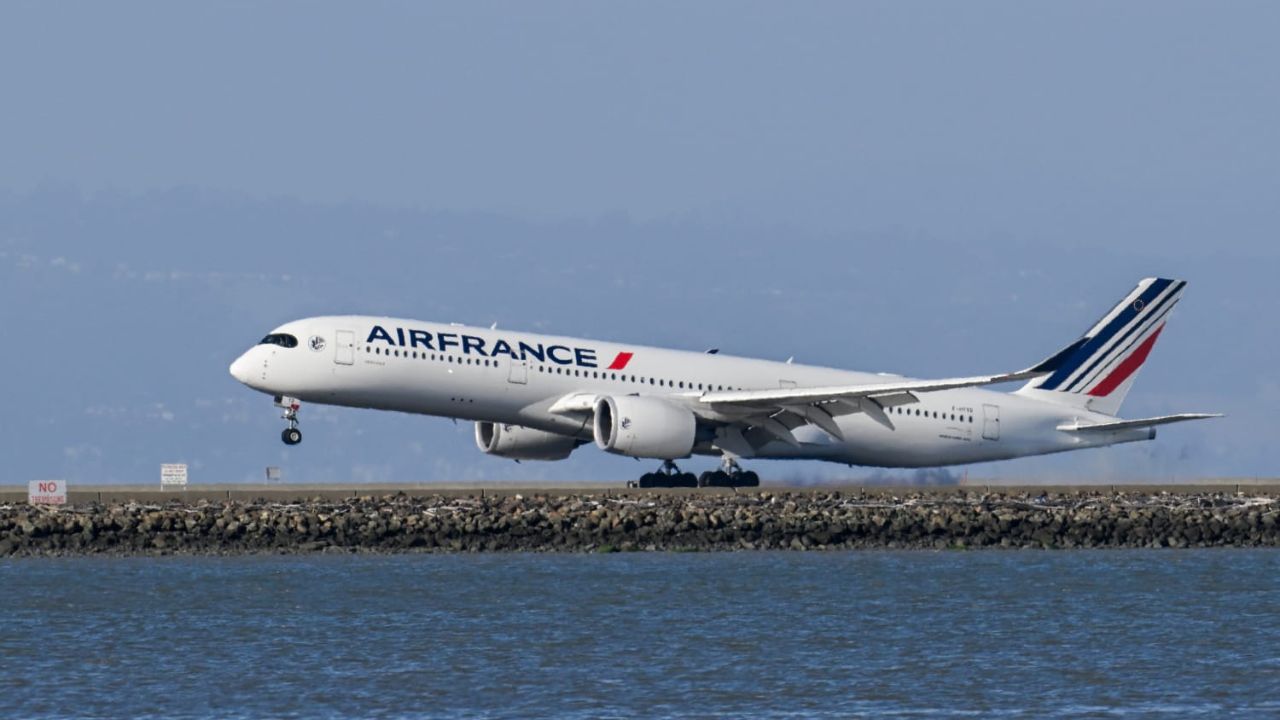
DETROIT, MI – An Air France flight traveling from Paris to Detroit was forced to divert to Montreal after it was discovered that a passenger from the Democratic Republic of Congo was boarded in error, violating strict new U.S. health entry restrictions.
Inadvertent Boarding Triggers Diversion
Air France Flight 378 was rerouted at the request of U.S. authorities and landed at Montreal Trudeau International Airport. A U.S. Customs and Border Protection (CBP) spokesperson confirmed the passenger should not have been allowed on the aircraft due to active entry restrictions aimed at reducing Ebola virus risks.
Air France confirmed the diversion was strictly administrative, noting there was no medical emergency on board.
Passenger Asymptomatic and Returned to Paris
The Public Health Agency of Canada assessed the passenger upon landing and determined the individual was completely asymptomatic. The passenger was subsequently placed on a return flight to Paris.
Medical experts emphasize that Ebola cannot be transmitted by individuals who are not showing symptoms. Passengers on board were not at risk of contracting the virus during the flight.
New U.S. Travel Restrictions Enforced
The incident highlights the strict enforcement of new travel protocols implemented following an ongoing Ebola outbreak in Central Africa linked to the Bundibugyo strain. Under current federal mandates:
- All U.S.-bound flights carrying travelers who have been in Congo, Uganda, or South Sudan within the past 21 days must funnel exclusively through Washington-Dulles International Airport in Virginia.
- Enhanced public health screenings are being conducted at the designated airport by the CDC and DHS.
In-Flight Confusion
Passengers aboard the flight reported being notified of the diversion about four hours prior to their scheduled arrival in Detroit. While flight tracking data shows the remaining passengers were later flown from Montreal to Detroit, travelers noted confusion when flight attendants donned face masks despite assurances that there was no technical or medical emergency.