Minneapolis, Minnesota – A tense law-enforcement operation in north Minneapolis turned violent Wednesday evening after a man armed with a shovel allegedly attacked federal officers, prompting an ICE agent to open fire. Officials say the man was shot in the leg and is expected to survive, but the incident sparked protests, political backlash, and renewed scrutiny of federal immigration enforcement in the city.
Incident Overview
The shooting occurred during a targeted arrest operation carried out by U.S. Immigration and Customs Enforcement (ICE) as part of Operation Metro Surge, according to federal and local officials. Authorities said ICE officers encountered resistance while attempting to detain several individuals, leading to a confrontation that escalated rapidly.
One man, identified by officials as a Venezuelan national, was struck in the leg after allegedly attacking an ICE officer with a shovel. He was later transported to a hospital along with the injured officer. Both are expected to recover.
Timeline of Events
According to law enforcement officials briefed on the incident, the shooting happened at approximately 7 p.m. Wednesday near North Sixth Street and North 24th Avenue in north Minneapolis.
Officials said the primary target of the operation initially attempted to flee in a vehicle before crashing into a parked car and running on foot. During the ensuing arrest attempt, the man allegedly assaulted an ICE officer, striking the agent with a shovel and attempting to hit the officer’s head.
An ICE Enforcement and Removal Operations (ERO) agent then fired a shot, striking the suspect in the leg. After being shot, the man fled into a nearby residence.
Details From Police and Federal Officials
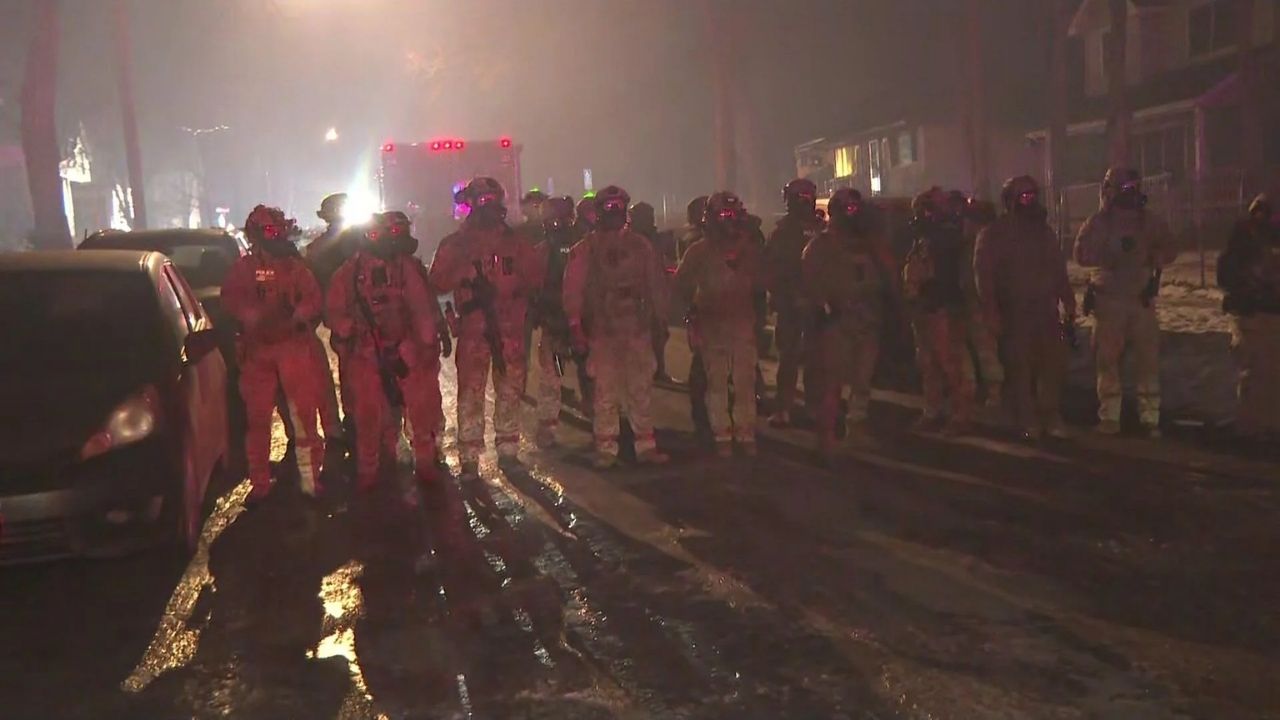
Authorities later determined that three additional individuals were inside the home. All four reportedly barricaded themselves inside, prompting a larger law-enforcement response. ICE officials said a specialized tactical team was deployed to breach the residence.
Officials believe all four individuals were taken into custody following the breach.
The Department of Homeland Security said the confrontation intensified when others joined the struggle.
“Fearing for his life and safety as he was being ambushed by three individuals, the officer fired defensive shots to defend his life,” DHS officials said in a statement, explaining that additional suspects allegedly attacked the officer with a snow shovel and a broom handle.
More information from DHS can be found through its official statements at dhs.gov.
Crowd Response and Public Unrest
Shortly after the shooting, a large crowd formed near the scene. Demonstrators clashed with law enforcement late into the night, with Minneapolis police reporting that officers were struck by fireworks, ice, and snowballs.
The unrest comes exactly one week after an unrelated but highly charged incident in south Minneapolis, where ICE officer Jonathan Ross fatally shot 37-year-old Renee Good, a case that has already heightened community tensions.
Statements From City Leaders
Minneapolis Mayor Jacob Frey and Police Chief Brian O’Hara held a late-night news conference urging calm and restraint.
“We have approximately 600 police officers in Minneapolis, and there are approximately 3,000 ICE agents in the area,” Frey said. “This is not the path we should be on in America.”
Frey described the situation as “not sustainable,” emphasizing the strain placed on local resources and community trust. He later echoed those concerns on social media, urging protesters not to escalate tensions.
Chief O’Hara confirmed that city police were responding to both the crowd and the broader safety risks created by the federal operation.
Political Fallout and State Response
The incident quickly drew sharp political reactions. Deputy Attorney General Todd Blanche issued a statement blaming Minnesota Governor Tim Walz and Mayor Frey for fueling unrest.
“Minnesota insurrection is a direct result of a failed governor and a terrible mayor encouraging violence against law enforcement,” Blanche said.
Earlier in the evening, Walz delivered a rare primetime address, calling on President Donald Trump and Homeland Security Secretary Kristi Noem to “end the occupation” of Minnesota and urging residents to document federal agents’ actions.
Later, Walz posted that state investigators were already on scene and called for peace despite public anger.
Additional Context on Public Safety
Federal immigration enforcement actions have increasingly become flashpoints in major cities, particularly when they intersect with local policing and densely populated neighborhoods. Officials warn that confrontations involving improvised weapons, such as shovels or tools, significantly increase the risk of serious injury or death for both officers and civilians.
Authorities continue to investigate the shooting, including the use of force and the events leading up to the barricade situation.
Conclusion
The north Minneapolis shooting underscores the volatile intersection of immigration enforcement, public protest, and political division. While officials say the injured man is expected to recover, the incident has already intensified scrutiny of ICE operations and raised new concerns about public safety and community stability.
If you were in the area or have been affected by similar enforcement actions, share your experiences in the comments below.