Omaha, Nebraska — A massive severe weather outbreak that erupted across the Plains over the weekend continued battering large parts of the United States on Tuesday, bringing dangerous thunderstorms, tornadoes, damaging winds, and flash flooding threats stretching from Texas all the way to New England.
Meteorologists warned that while the tornado threat is lower than previous days, millions of Americans remain under the risk of severe weather as the storm system moves eastward.
Severe Storm Threat Expands Across Multiple States
Forecasters said Tuesday night’s storm threat covered a much larger area compared to earlier in the outbreak. Severe thunderstorms were expected from parts of Texas and the Ohio Valley into the Great Lakes, upstate New York, and New England.
Although the likelihood of strong tornadoes decreased, officials warned residents to prepare for damaging wind gusts, large hail, and locally heavy rainfall capable of causing flooding.
The widespread storm activity marked the final phase of a multi-day severe weather outbreak that caused destruction across several Midwestern and Plains states.
Weekend Tornado Outbreak Leaves Destruction Behind
The outbreak first intensified on Saturday, generating more than 200 severe weather reports across Nebraska, northern Kansas, and northern Missouri.
According to National Weather Service surveys, several tornadoes touched down in Missouri, including weak EF0 and EF1 twisters in Linn and Livingston Counties.
By Sunday, the outbreak became even more dangerous, producing another 275 reports of severe weather across South Dakota, Minnesota, Iowa, Nebraska, and Kansas.
One of the strongest storms struck Howard County, Nebraska, near St. Libory. The National Weather Service later confirmed the tornado was rated EF3 with peak winds of 160 mph.
The powerful tornado destroyed four homes in the area. Fortunately, no fatalities or injuries were reported because residents sought shelter after receiving tornado warnings.
Tornado Emergency Issued in Nebraska
Another dangerous tornado prompted the National Weather Service to issue a rare tornado emergency near Hebron, Nebraska, close to the Kansas border.
The tornado reportedly tracked near populated areas southwest of Lincoln and was later rated EF1.
Additional tornado damage was reported north of Ashland, Nebraska, and near Plattsmouth south of Omaha, where homes suffered damage from apparent tornado activity.
Tornadoes were also spotted in northwest Iowa and southern Minnesota, including areas near Mason City and Worthington.
Damaging Winds Cause Widespread Problems
Severe thunderstorms also unleashed powerful straight-line winds across several states.
In Iowa, wind gusts reached 82 mph near Estherville, while strong winds damaged a grain elevator in Greenville.
Monday brought another round of destructive weather, producing over 300 severe weather reports across the Great Lakes, Midwest, and Central Plains.
Storm chasers reported seeing multiple tornadoes in Kansas and southeastern Nebraska, including dramatic multi-vortex tornadoes near Pawnee City and Falls City.
Meanwhile, a line of severe thunderstorms swept through Illinois, Indiana, and Michigan, causing widespread wind damage.
Maryland Could See Record-Breaking Heat This Week Before Storms Crash the Memorial Day Weekend
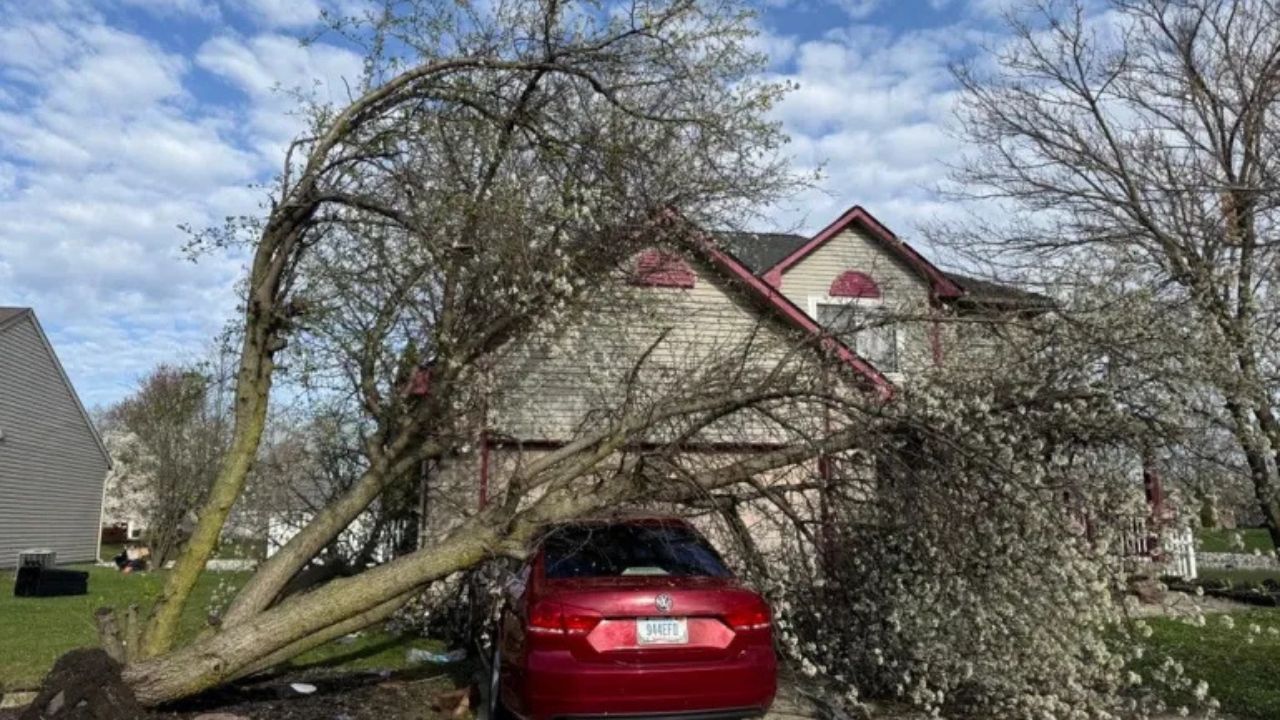
In the Chicago area, wind gusts reached 79 mph at Midway Airport, snapping tree branches and damaging structures. In Michigan, three airplanes were reportedly flipped at Lansing’s Capital Airport as gusts climbed to 68 mph.
Roof damage was also reported in Woodland and Rochester Hills.
Unusual Weather Pattern Helped Fuel Outbreak
Meteorologists noted that May is typically the busiest month for tornado activity in the United States. However, severe weather activity had remained relatively quiet earlier in the month.
Experts say that changed dramatically due to a shifting weather pattern that created more favorable conditions for powerful spring storms east of the Rockies.
The recent outbreak now stands as one of the most significant severe weather events of the season so far.
Have you experienced severe weather in your area recently? Share your thoughts and experiences respectfully in the comments below.