
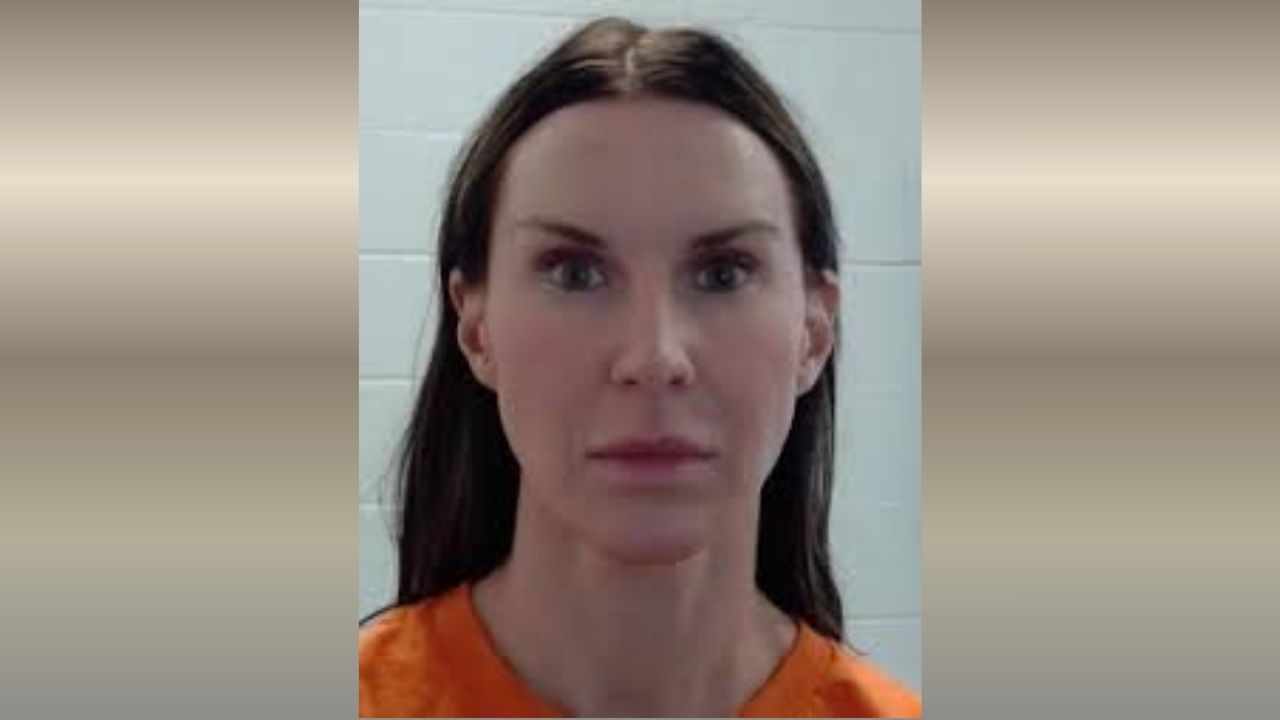
Norman, Oklahoma – A woman sentenced to eight years in prison for a high-speed DUI crash that left a 20-year-old woman with life-altering injuries is set to be released after serving just 70 days. The early release has sparked outrage from the victim’s family and prompted the local District Attorney to call for changes in state law.
The case has reignited debate over Oklahoma’s prison overcrowding policies and the use of GPS monitoring programs for nonviolent offenders.
Incident Overview
According to Norman Police, Sara Polston was driving 66 miles per hour in a 25 mph zone in February 2023 when she crashed into a vehicle driven by 20-year-old Micaela Borrego. Authorities reported Polston’s blood alcohol level was nearly twice the legal limit at the time of the crash.
The impact left Borrego with a traumatic brain injury. She fell into a coma and later had to relearn how to eat, speak, and walk.
On December 8, 2025, a judge sentenced Polston to eight years in prison, followed by seven years of probation.
Despite that sentence, the Oklahoma Department of Corrections confirmed Polston will be released on February 19, 2026, after serving approximately 70 days.
Timeline of Events
The crash occurred in early 2023, and the Borrego family waited nearly three years for the case to move through the courts. During that time, Micaela underwent extensive inpatient and outpatient rehabilitation.
After sentencing in December 2025, Polston entered the custody of the Department of Corrections the same day. Under current state statute and Department of Corrections policy, inmates may be considered for GPS monitoring after serving at least 30 days, provided they meet specific eligibility requirements.
Polston became eligible under that policy and was approved for release.
Family Response
Micaela’s mother, Krista Borrego, says the early release feels like a betrayal after years of legal proceedings and recovery struggles.
“There’s no repercussions. There’s no real justice. It’s just loopholes and pivoting and maneuvering,” Borrego said.
She explained that her daughter continues to receive speech therapy and physical therapy and still suffers from a severe speech impediment.
“She’s still doing outpatient. She still attends speech. She has a severe speech impediment. She still has to go to physical therapy and OT,” Borrego said.
Krista Borrego acknowledged that overcrowding in prisons is a real issue but believes this case should not qualify for early release consideration.
“I understand that the prison is crowded, but 30 days to be considered and be released in 70 — my daughter was still in a coma at that point,” she said.
The family says the long wait for justice makes the early release even harder to accept.
“Her life is forever changed. She should not be the only one suffering the consequences of Sara Polston.”
The Law Behind the Release
Cleveland County District Attorney Jennifer Austin explained that Oklahoma law previously allowed inmates sentenced to five years or less to be eligible for GPS monitoring after serving 90 days. However, the statute was amended in 2021 to expand eligibility to those sentenced to 10 years or less, and the 90-day requirement was removed.
Under Department of Corrections policy, inmates must serve at least 30 days before being considered for release with GPS monitoring.
To qualify, inmates must:
- Have no prior criminal history
- Pose no threat to the community
- Have no disciplinary infractions in prison
- Show willingness to complete treatment programs
- Successfully participate in required programs
According to the Department of Corrections, Polston completed multiple programs prior to incarceration, making her eligible under policy guidelines.
District Attorney Calls for Change
District Attorney Austin believes the law was not intended to apply in cases involving severe bodily injury caused by DUI.
“We are asking that you please do not allow that. It does not have to. It is not a shall-be-released. It is a consideration,” Austin said.
She noted that in her district alone, 21 people have been released under the program in the past year, typically involving drug offenses and property crimes.
Statewide, there are more than 23,000 inmates in Oklahoma prisons, with only around 160 individuals participating in the GPS monitoring program.
“This GPS policy is appropriate for some offenders, not for Sara Polston,” Austin said. “It is not an appropriate statute to be used for someone who nearly takes someone’s life.”
Austin is now pushing for legislation that would classify DUI with great bodily injury as a violent crime and require victim input before release decisions are made.
“They only consider the defendant. They do not consider the victim,” she said. “That is an error.”
Department of Corrections Response
The Oklahoma Department of Corrections stated that Polston is eligible for release under state statute and agency policy. Officials confirmed she was received into custody on December 8, 2025, and that all procedures were followed.
The agency said it treated Polston as it would any other inmate with a similar criminal history, offense category, and program completion record.
Additional Context on DUI and Public Safety
Drunk driving remains one of the leading causes of serious injury crashes nationwide. High-speed DUI incidents significantly increase the risk of catastrophic injuries, particularly traumatic brain injuries that can require lifelong medical care.
Victim advocacy groups argue that sentencing and early-release laws must balance prison overcrowding concerns with the long-term impact on victims and their families.
Conclusion
The early release of Sara Polston has intensified scrutiny of Oklahoma’s GPS monitoring statute and raised difficult questions about how the justice system weighs rehabilitation against victim impact. As lawmakers consider potential changes, the Borrego family continues focusing on Micaela’s ongoing recovery.
Share your experiences in the comments below.