
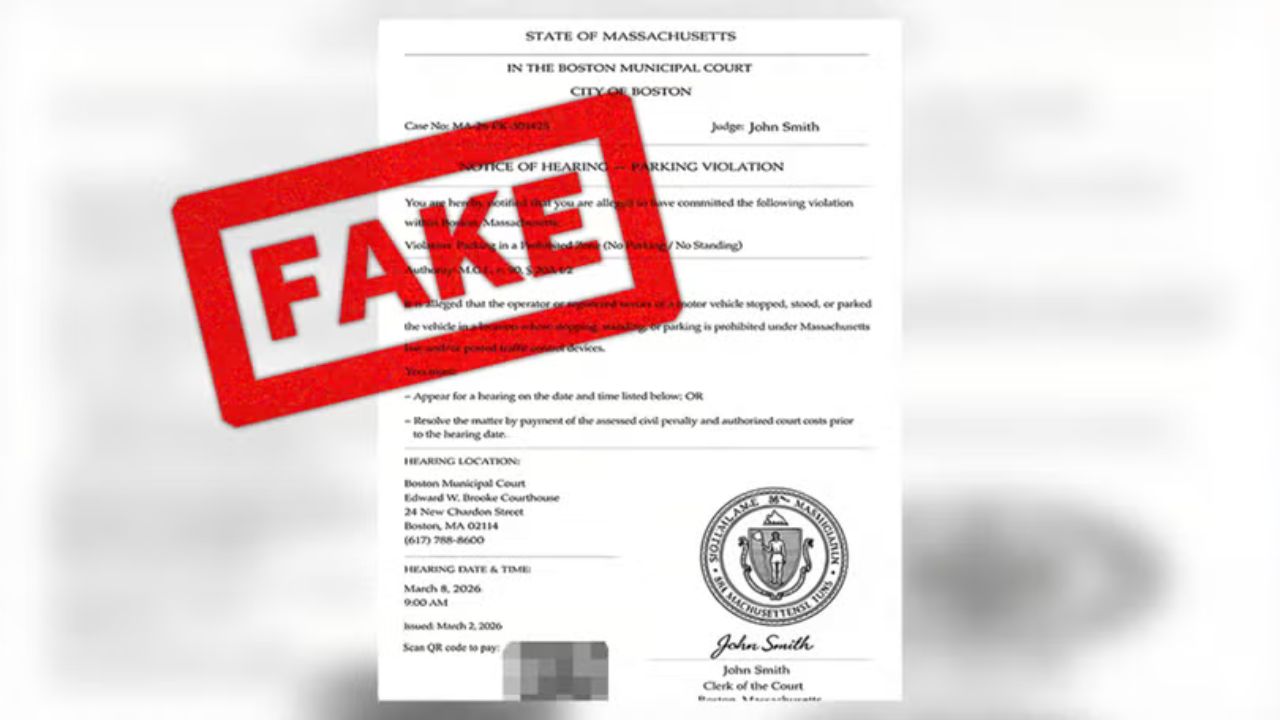
Boston, Massachusetts — Authorities are warning residents about a new scam circulating in the city involving fake court notices for alleged parking violations, according to the Boston Police Department.
Officials say the fraudulent notices are designed to look like official legal documents from the Boston Municipal Court, but they are not issued by the City of Boston or any legitimate government agency. Police are urging residents to stay cautious and verify any suspicious documents before making payments.
The warning comes as scammers increasingly use convincing documents and digital tools to trick people into sending money or providing personal information.
Police say fake court notices mimic official documents
According to the Boston Police Department, the scam involves fraudulent “Notice of Hearing — Parking Violation” letters that appear to come from the Boston Municipal Court.
The notices are made to look highly official and may include several details that make them appear legitimate.
Fraudulent notices may contain:
- A fake case number
- A judge’s name and signature
- An address for the Boston Municipal Court
- A scheduled hearing date
- A Massachusetts state seal
- A QR code that directs victims to make a payment
Police say these documents are not legitimate and were not issued by the City of Boston or any government agency.
Because the notices closely resemble real legal documents, officials say some residents could easily mistake them for genuine court communications.
QR codes used to trick victims into sending money
One of the most concerning parts of the scam involves a QR code printed on the notice, which prompts recipients to scan it and pay a supposed parking fine.
Authorities strongly warn residents not to scan QR codes or send payments based on unsolicited notices without verifying the information first.
“Do not scan the QR code or submit any payment based on an unsolicited notice without first verifying it through official channels,” police warned.
Scammers often rely on urgency or confusion to pressure people into paying quickly without checking whether the notice is real.
How residents can verify legitimate parking violations
Police say the safest way to confirm whether a parking violation is real is by checking directly through the City of Boston’s official parking website.
Residents should never rely solely on documents received unexpectedly in the mail or through other unofficial channels.
Officials recommend:
- Verifying the ticket through the official City of Boston parking page
- Avoiding payments through unfamiliar QR codes or links
- Contacting city authorities if something appears suspicious
Taking a few moments to confirm a notice can help prevent financial loss and identity theft.
Police encourage victims to report suspicious notices
Boston police are asking anyone who receives one of the fraudulent notices — or who may have already been targeted — to report the incident.
Reporting scams helps investigators track patterns and warn other residents before more people are affected.
Authorities say residents who receive these notices should contact the Boston Police Department.
Tips can also be submitted anonymously through CrimeStoppers, allowing people to provide information without revealing their identity.
Residents can report information by:
- Calling 1-800-494-TIPS
- Texting “TIP” to CRIME (27463)
- Submitting information through the CrimeStoppers website
Read Also: Measles Exposure Alert Issued After More Than 100 Children Potentially Exposed in Sacramento Program
Scams involving official-looking documents on the rise
Officials say scams that imitate government notices, court documents, or official letters have become increasingly common.
Fraudsters often design documents that look convincing enough to fool recipients who may not immediately question them.
Experts recommend always verifying legal or financial notices directly through official government websites or phone numbers before taking action.
Even if a document appears legitimate, authorities say residents should pause and confirm the information through trusted sources before making any payments.
The Boston Police Department says public awareness is one of the best ways to prevent these scams from spreading further.
Have you or someone you know ever received a suspicious notice like this? Share your thoughts or experiences respectfully in the comments below.