
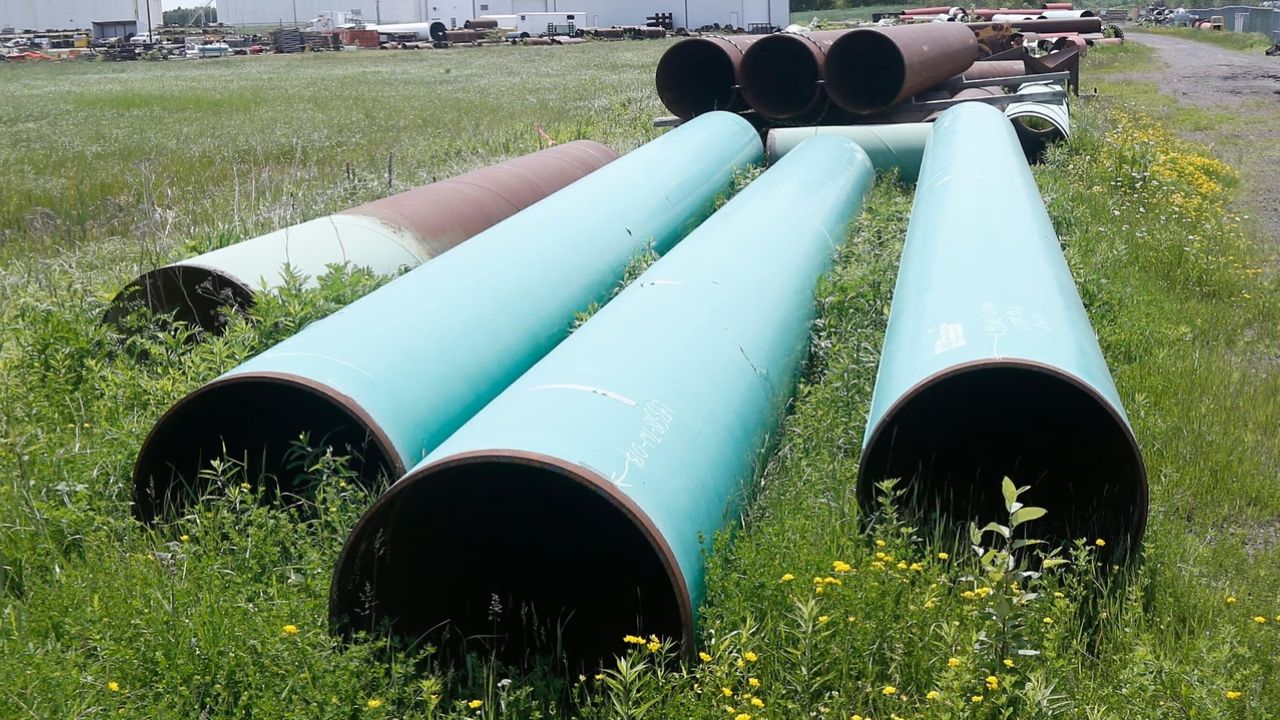
ASHLAND & IRON COUNTIES, WI — Chainsaws are officially echoing through the Northwoods as crews begin clearing trees for the new 41-mile segment of the Line 5 oil and gas pipeline. The move marks a massive milestone in a $450 million project that has been stalled for years by legal battles and environmental protests.
Construction is Underway
The Canadian energy giant Enbridge launched the work in late February. This follow-up comes on the heels of a critical approval from the U.S. Army Corps of Engineers and a successful defense of state permits in court.
According to Paul Eberth, Enbridge’s Midwest operations director, the project is currently in its initial phase:
- Current workforce: Approximately 100 workers.
- Tasks: Staking the route, clearing timber, and environmental monitoring.
- Peak workforce: Expected to reach 700 workers as construction ramps up.
Why the Reroute?
The project was proposed six years ago after the Bad River Band of Lake Superior Chippewa filed a lawsuit to remove the pipeline from tribal lands. The tribe cited the “catastrophic” risk of a spill on their territory. The new “right-of-way” will now cut through Ashland and Iron counties, bypassing the reservation entirely.
A “Final Push” from Opponents
Despite the presence of crews on the ground, the legal fight is far from over. Earthjustice, representing the Bad River Band, has asked the Iron County Circuit Court to overturn state permits.
Opponents argue that the Wisconsin Department of Natural Resources (DNR) violated laws designed to protect the state’s wetlands. The reroute is expected to:
- Cross 186 waterways.
- Impact roughly 101 acres of wetlands.
“The pipeline goes against laws meant to protect water resources in perpetuity,” said John Petoskey, an attorney with Earthjustice.
For tribal members like Joe Bates, the stakes are more than just legal—they are cultural. Bates notes that construction threatens “manoomin” (wild rice) and traditional medicinal plants harvested along the Mashkiiziibii, also known as the Medicine River.
The Economic Argument
Enbridge remains firm that the pipeline is an essential “energy artery” for the region. The line transports 23 million gallons of oil and natural gas liquids daily from Superior, Wisconsin, to Sarnia, Ontario.
The company has warned that a complete shutdown—which some activists have called for—would result in billions in economic losses and a significant spike in propane prices for residents across the Midwest.
What’s Next?
A federal judge recently stayed an order to shut down the existing line, giving Enbridge more breathing room to finish the reroute. If construction proceeds as planned despite the ongoing lawsuits, Enbridge expects to have the project completed by April 2027.

