
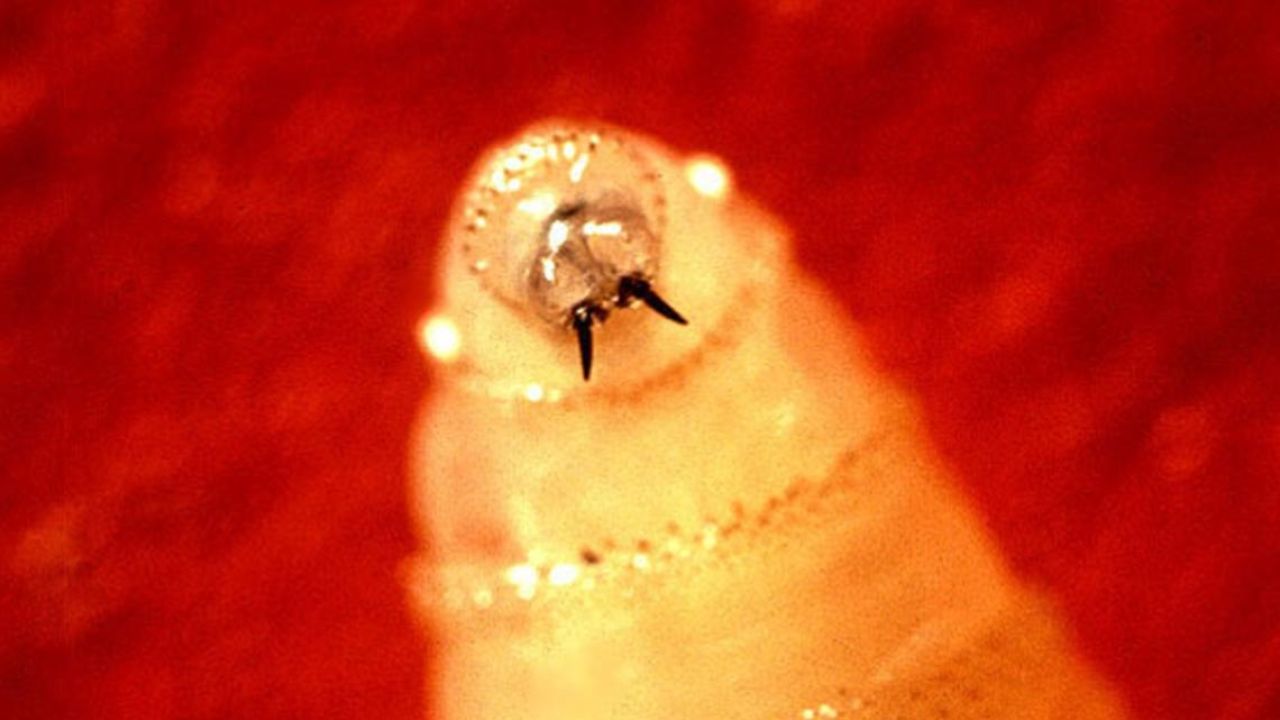
AUSTIN, TX — A terrifying, potentially deadly parasite is inching closer to the Lone Star State, prompting Texas Agriculture Commissioner Sid Miller to issue a stark warning to the public.
The New World screwworm, a flesh-eating parasitic fly that preys on livestock, pets, and even humans, was recently detected in Nuevo León, Mexico—a mere 90 miles from the U.S. border. Just one year ago, the insect was located 400 miles away, indicating a rapid and aggressive northern migration.
“A Direct and Imminent Threat”
Commissioner Sid Miller did not mince words regarding the high stakes of the situation.
“The New World screwworm is not some distant problem,” Miller stated. “It is a direct and imminent threat to Texas, and we are treating it that way. This is a high-stakes situation for our ranchers, our livestock industry and our food supply, and we are moving aggressively to stay ahead of it.”
How the Parasite Attacks: A Gruesome Lifecycle
According to the CDC, the New World screwworm is uniquely dangerous because it feeds on living tissue rather than dead flesh.
- The Attraction: Female flies are drawn to the scent of open wounds or body openings (nose, eyes, ears, and mouth). Even a wound as small as a tick bite or a scratch is enough to attract them.
- The Infestation: A single female can lay up to 300 eggs in one sitting and as many as 3,000 over her short lifespan.
- The Damage: Within hours, the eggs hatch into maggots that burrow deep into the animal’s or human’s flesh, feeding on the living tissue for about seven days before dropping to the ground to pupate.
Human Cases and Regional Outbreaks
While primarily a threat to the multi-billion dollar livestock industry, humans are not immune. Since an outbreak began in Panama and Costa Rica in 2023, nearly 1,700 human cases have been reported across Central America and Mexico.
The United States recently saw its first confirmed human case in years when a Maryland resident returned from El Salvador with an infection. While that patient recovered, the sheer number of animal cases—nearly 168,000 reported so far—has officials on high alert.
Symptoms to Watch For
The CDC warns that an infection (known as myiasis) is often easy to spot but difficult to stomach. Symptoms include:
- Visible maggots moving beneath or within the skin.
- A distinct, foul-smelling odor emanating from a wound.
- Bleeding or fluid-filled open sores that do not heal.
The Texas Defense Strategy
Texas is already moving into a defensive posture. The USDA and the U.S. Army Corps of Engineers have announced plans for a sterile fly production facility in Edinburg, Texas. This facility will produce sterile male flies to be released into the wild, a proven method to disrupt the breeding cycle and stop the spread.
Michael Neault, director of Clemson Livestock-Poultry Health, emphasizes that early detection is the key to survival. “NWS is treatable, and animals can make a full recovery if it is detected early,” Neault said.
What You Can Do
Ranchers and pet owners are urged to inspect their animals daily for any open wounds. If you see suspicious maggots or a wound that seems to be “growing,” report it immediately to your local veterinarian or the Texas Department of Agriculture.
What do you think, Texas? Are you worried about the impact on our local food supply and livestock? Have you started taking extra precautions with your pets? Share your thoughts and help spread the word in the comments below.