KAUAI, HI — New details have emerged regarding the terrifying final moments of a sightseeing flight that plunged into the Pacific Ocean off Kauai’s Na Pali Coast last month. According to a preliminary report released Friday by the National Transportation Safety Board (NTSB), the pilot described a catastrophic sequence of events that left three passengers dead and two others fighting for their lives.
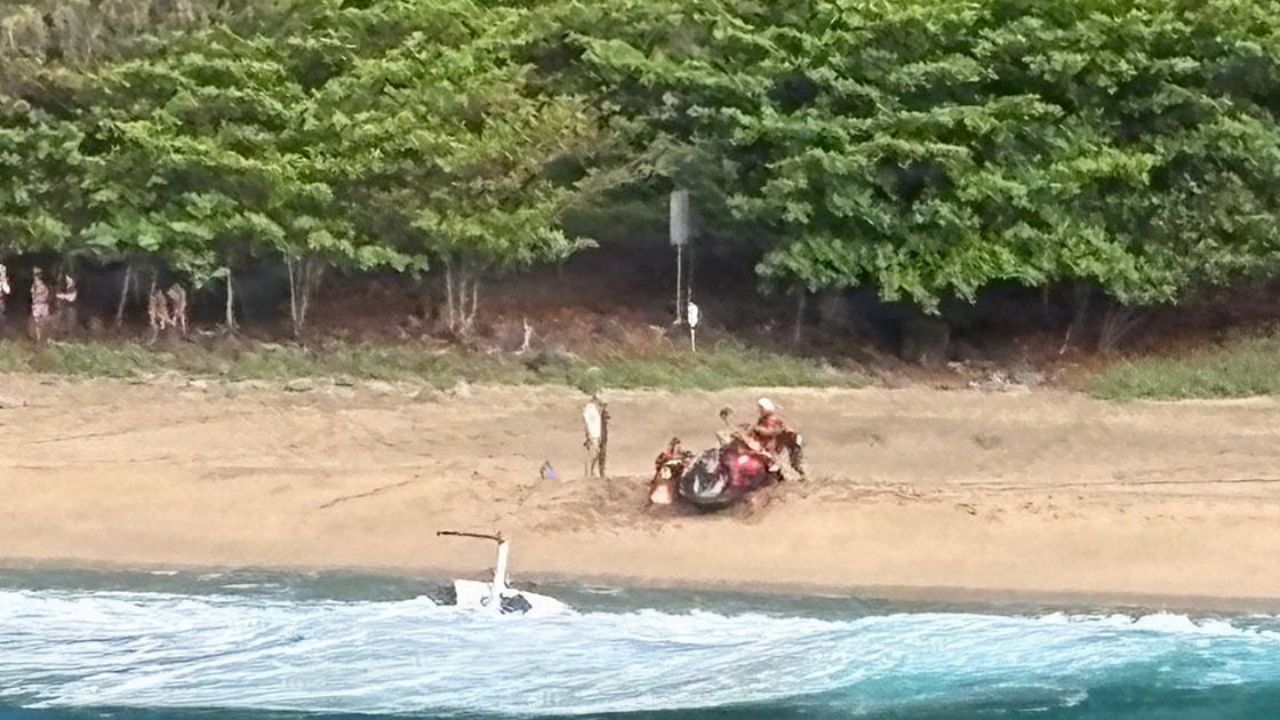
The March 26 accident occurred near the remote Kalalau Beach, a world-renowned destination famous for its jagged cliffs and turquoise waters. What was meant to be a scenic “thrill-seeker” tour quickly turned into a nightmare as the aircraft began to fail mid-air.
The Pilot’s Account: “Waves of Vibration”
The pilot, who survived with serious injuries, told investigators that the trouble began during a routine left turn away from the shoreline. He reportedly experienced a “high-frequency vibration” that traveled through the entire helicopter.
According to the report, the pilot described the sensation as coming in “waves” that grew stronger with each pulse. Suddenly, the aircraft began rotating violently in a clockwise direction. In a desperate attempt to regain control, the pilot initiated an autorotation—an emergency maneuver where the rotor blades spin using the force of moving air rather than the engine’s power.
While the maneuver successfully stopped the spinning, the helicopter lacked the altitude to reach the safety of the beach. The pilot managed to broadcast a “Mayday” call before the helicopter struck the water approximately 75 yards offshore, rolling onto its right side and breaking apart.
Expert Theories: Mechanical Failure Suspected
While the NTSB has not yet named an official cause—a process that typically takes over a year—aviation experts are pointing toward a specific mechanical issue.
“It sounds like a catastrophic mechanical failure, likely involving the tail rotor,” said former NTSB investigator Alan Diehl. The tail rotor is responsible for counteracting the torque of the main rotor; if it fails, a helicopter will spin uncontrollably in the opposite direction.
Aviation safety expert Jeff Guzzetti agreed, noting that the pilot’s description of vibrations followed by a sudden spin is a “textbook” indicator of tail rotor failure. Guzzetti praised the pilot’s quick thinking, stating that he “did the right things” to stop the rotation, but simply ran out of time and air to make a safe landing.
A Pattern of Tragedy in Hawaiian Skies
The crash has reignited a fierce debate over the safety of Hawaii’s sightseeing industry. The Na Pali Coast is notorious for turbulent air and rapid weather shifts, posing unique challenges for even the most experienced pilots.
This latest incident adds to a grim tally:
- 16 deaths have occurred in Hawaii helicopter crashes over the last seven years.
- Two major crashes in 2019 alone prompted calls for stricter federal oversight.
- “Doors-off” tours, like the one operated by Airborne Aviation in this incident, have faced particular scrutiny across the U.S. following similar fatal accidents in New York’s East and Hudson Rivers.
The Victims
Authorities have identified the three passengers who lost their lives as Margaret Rimmler (65) and Patrick Haskell (59), both of Massachusetts, and Oksana Pihol (40), a Ukrainian national. One passenger survived alongside the pilot, though the NTSB has not yet disclosed where the survivor was seated or how they managed to escape the submerged wreckage.
As the NTSB continues its investigation into Airborne Aviation’s maintenance records and the helicopter’s design, the local community and aviation experts alike are left asking: Is enough being done to protect “thrill-seekers” in the sky?
What do you think, Hawaii? Should “doors-off” helicopter tours be banned or more strictly regulated? Have you ever taken a tour of the Na Pali Coast and felt unsafe?
Share your thoughts and experiences in the comments below.