FLORIDA — A series of storms is set to move across the Sunshine State this week, offering a double-edged sword for residents: much-needed relief for a historic drought, but also a significant threat of urban flooding.
The Florida Peninsula is currently facing its most severe dry spell in over a decade. According to the U.S. Drought Monitor, parts of the state are in D3 “Extreme Drought,” the highest level seen in 25 years outside of the record peaks in 2000 and 2011.
Timing the Storms
The wet weather began Tuesday as a cold front stalled over the state, interacting with an upper-level disturbance. While a brief lull is expected on Wednesday, a second surge of moisture will arrive on Thursday.
The Good News: The rain is expected to clear by Friday, leaving the upcoming weekend dry for outdoor plans.
Rainfall Totals: Who Will See the Most?
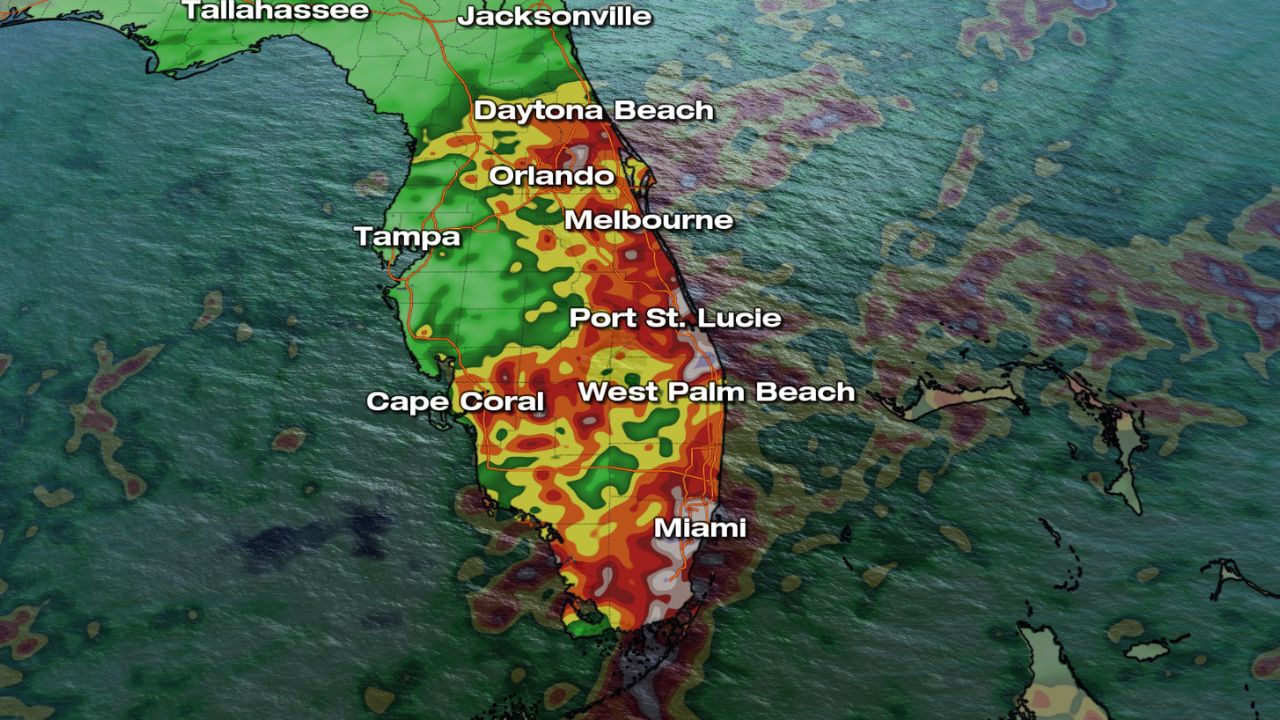
Meteorologists are keeping a close eye on the eastern coastline, where the heaviest totals are forecast.
- East Coast (Daytona Beach to Melbourne): Widespread totals of over 3 inches are expected. Slow-moving storms could dump more than 5 inches in isolated spots.
- South Florida (Miami): Totals between 1 and 3 inches are anticipated.
- North Florida & Panhandle (Jacksonville to Tallahassee): Most areas will see around 1 inch of rain.
The Flood Threat
While the rain is desperately needed, the speed of the downpour poses a danger. Because the soil is currently so parched and compacted from the drought, it cannot absorb water quickly.
“Drought-stricken soil doesn’t handle fast rainfall very well,” experts warn. “It needs steady rain to chip away at the drought. When it falls too fast, it leads to immediate runoff and flash flooding.”
Urban areas and cities with poor drainage should be on high alert for rapid water rises this week.
Context of the Crisis
The rainfall deficit this year has been staggering. Tallahassee has recorded only 6.50 inches of rain in 2026—less than half of its nearly 15-inch average for this time of year. Jacksonville, Orlando, and Daytona Beach are seeing similar record lows.
While this week’s storms won’t end the drought entirely, officials hope the widespread coverage provides a necessary boost to local water tables without causing widespread property damage.