
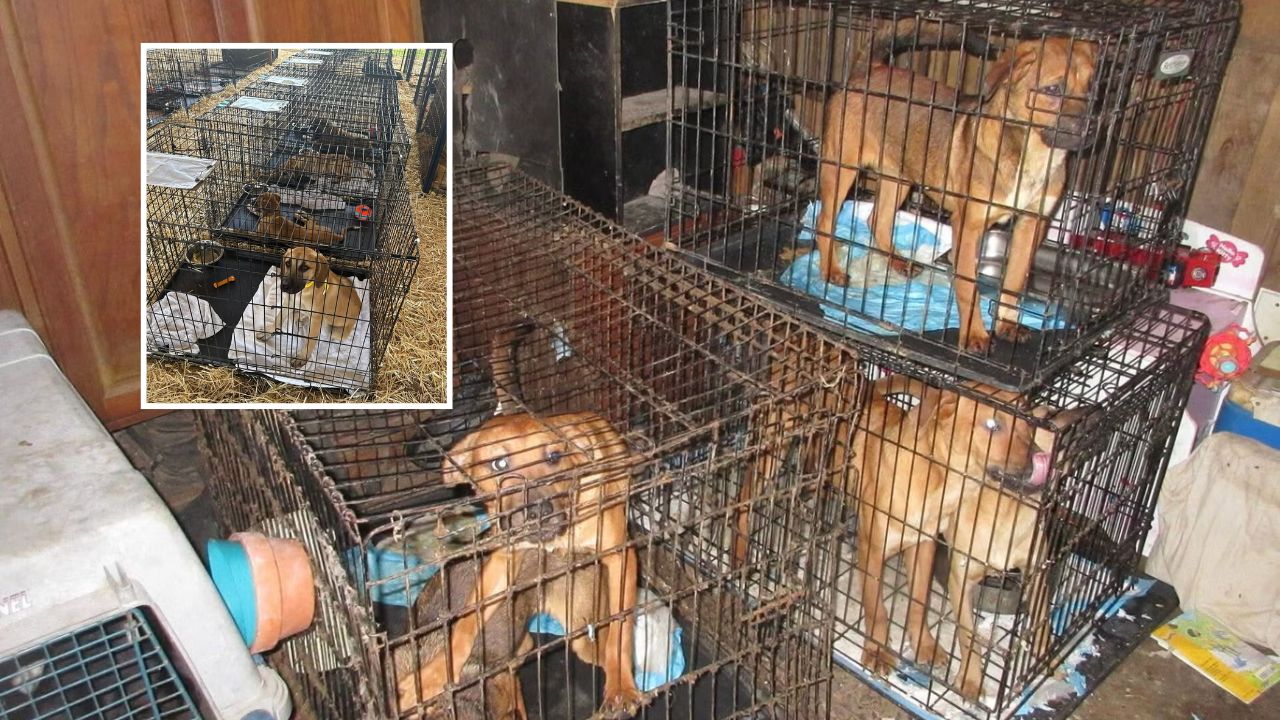
Ellis County, Texas — More than 125 dogs have been rescued from what officials described as horrific hoarding conditions in North Texas following a large-scale animal rescue mission that stretched over several months.
The rescue effort, led by Ferris Animal Services and Flying B Animal Rescue & Sanctuary, culminated this past week with the emergency removal of the final 75 dogs from a property in Ellis County, located roughly 40 miles south of Dallas.
Rescue Mission Uncovered Disturbing Conditions
Authorities say the dogs were discovered living in severely overcrowded and inhumane environments, prompting an urgent response from local rescue teams.
The situation reportedly became so overwhelming that local officials were forced to seek help from major national animal welfare organizations to safely remove and care for the animals.
The rescue operation unfolded gradually over several months, with some dogs previously removed through owner surrenders and standard rescue procedures before the final large-scale extraction took place.
Officials have not yet confirmed whether any criminal charges will be filed in connection with the case.
National Organizations Joined the Rescue Effort
As the number of animals and the scale of the suffering became clearer, Ferris Animal Services reached out for outside support.
“When the weight of their suffering began to exceed our local resources, we knew we had to call in the best,” said Todd McGehee, manager of Ferris Animal Services.
“Partnering with RedRover and American Humane allowed us to turn a desperate situation into a rescue mission.”
National organizations including American Humane and RedRover joined local teams to help coordinate medical care, transportation, temporary sheltering, and relocation efforts for the rescued animals.
The collaboration allowed rescuers to safely remove the dogs while preventing local shelters from becoming overwhelmed.
Las Vegas Teen Charged with Murder After Homeless Woman Found Beaten to Death
Dogs Moved to Shelters and Adoption Programs
As of Friday, nearly all of the rescued dogs had been transferred into long-term shelter placements where they can begin recovery and rehabilitation.
According to reports, 10 dogs remain in temporary boarding and may eventually be transported to northern states for adoption opportunities.
Photos shared online by Ferris Animal Services showed dozens of rescued dogs and puppies sitting inside crates following the operation, highlighting both the scale of the rescue and the heartbreaking conditions they had endured.
“It takes a community to change the world for all of these dogs, and we are so incredibly proud of ours,” the group wrote on Facebook while thanking the many volunteers, shelters, and rescue agencies involved.
Rescue Highlighted Major Shelter Challenges
While the mission ultimately saved more than a hundred animals, officials admitted the operation placed enormous pressure on local resources and required significant coordination between agencies and volunteers.
The case has now intensified discussions around the need for improved animal welfare infrastructure in North Texas.
According to reports, the situation has renewed momentum behind plans for a proposed regional Animal Welfare Campus, a large multi-million dollar facility aimed at handling future large-scale cruelty and hoarding cases more efficiently.
Officials believe the proposed campus would provide expanded shelter space, veterinary services, emergency response coordination, and long-term housing options for rescued animals.
Community Praised for Stepping Up
Animal advocates say the successful rescue would not have been possible without the combined efforts of local volunteers, rescue organizations, foster families, and animal welfare professionals.
The case has also sparked emotional reactions online, with many people praising the rescuers for stepping in to save the dogs from unsafe living conditions.
For now, the rescued animals are beginning the long process of recovery while many prepare for the possibility of finally finding permanent homes.
What do you think should be done in large-scale animal hoarding cases like this? Share your thoughts respectfully in the comments below.